

How to Style Temple Jewellery With Silk Sarees for Every Occasion

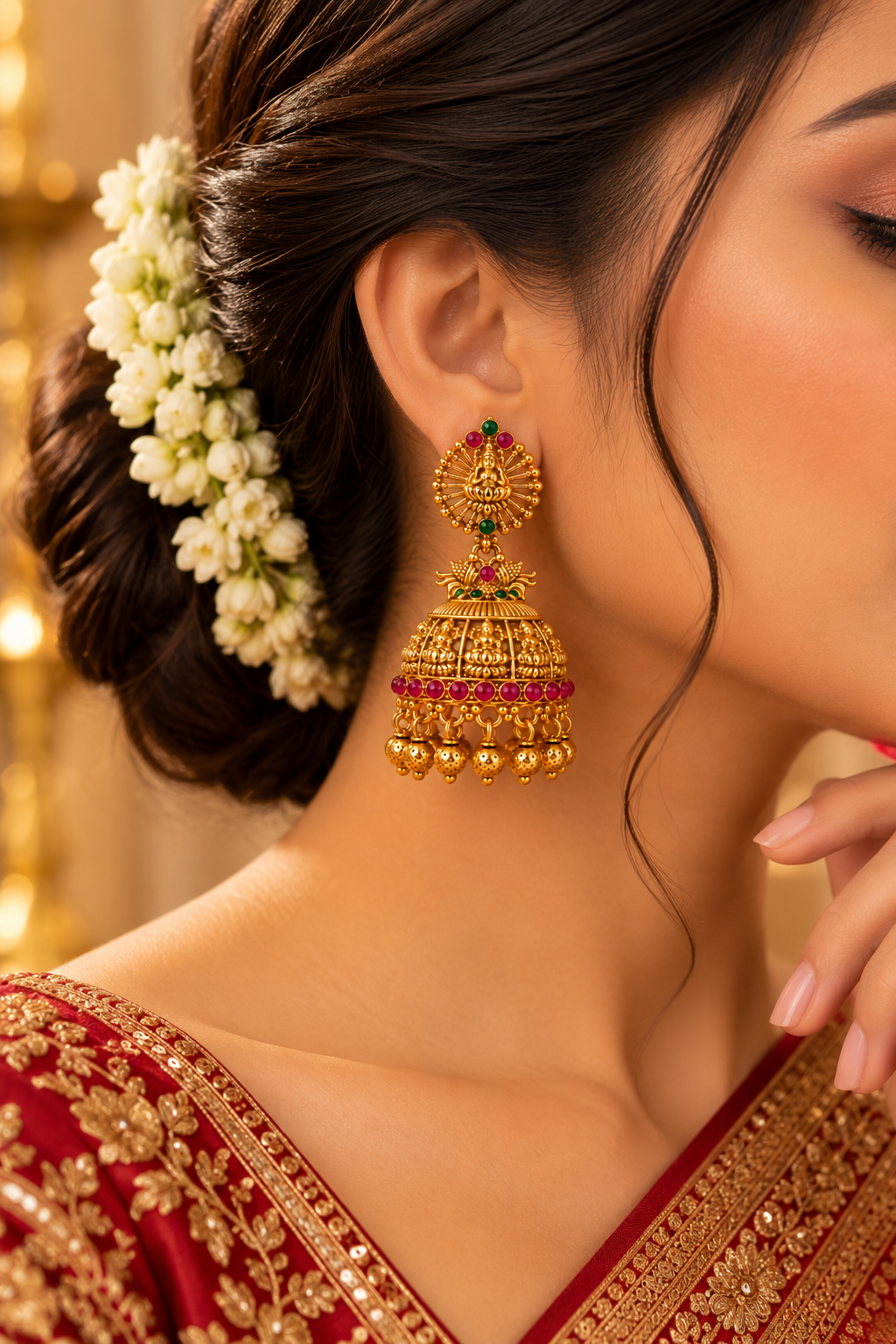
A Kanjeevaram does most of the work by itself. The weight, the zari, the colour. Which is exactly why temple jewellery is easy to get wrong with it, because the instinct is to add more when the saree needs you to add less. Done well, temple jewellery and silk together are the most striking combination in Indian dressing. Here’s how to put the two together for a wedding, a puja, a festival or an ordinary Sunday.
What Temple Jewellery Actually Is
Temple jewellery began in South India as ornaments made for deities in temples, and the motifs come straight from that origin: Lakshmi faces, Ganesha, peacocks, mango or paisley shapes, and the thick antique gold finish that reads centuries old rather than new.
That origin explains why it suits silk so well. Both come from the same visual world. A Kanjeevaram saree and a Lakshmi haar were made for each other in a way that modern stone jewellery never quite matches.
Start With the Finish, Not the Design
Temple jewellery comes in two broad finishes, and picking the wrong one is the most common mistake. Antique or oxidised gold has a darker, matte look. Bright gold plating is shinier and more polished.
Antique suits traditional silk in deep colours: maroon, mustard, bottle green, rust, deep purple. Bright gold works better with lighter silks, pastels and modern blended fabrics. If your saree has heavy gold zari, antique jewellery stops the two golds from competing.
Matching Temple Jewellery to Your Saree Colour
Temple pieces usually carry red or green stones, sometimes pearls, so colour matching is simpler than with kundan.
Red and maroon silks take ruby-stone temple pieces or plain antique gold. Green and teal silks look best with plain gold or pearl-set pieces, since adding green stones on green silk flattens the whole look. Mustard, orange and rust take red stones well. Cream, off-white and ivory silks are the most forgiving, and almost any temple piece works.
When in doubt, choose plain antique gold with no stones. It never clashes.
Temple Jewellery for a Wedding or Reception
This is where you can wear the full set. A short temple necklace with a long haar layered below it, matching jhumkas, bangles on both wrists and a maang tikka.
One check before you commit: if your blouse has heavy work at the neckline, drop the short necklace and wear only the long haar so the embroidery stays visible. The neckline decides this, not the budget.
For a bride, temple jewellery is the standard South Indian choice, and it photographs far better in daylight mandapams than bright stone sets, which can look washed out in strong light.
Temple Jewellery for a Puja or Religious Function
Keep it to one necklace and jhumkas. A short Lakshmi pendant on a simple chain with a cotton or light silk saree is the right register for a puja at home, a temple visit or a satyanarayana.
Practical note: skip the long haar and heavy tikka if you’ll be bending over a thali or sitting on the floor for an hour. Comfort matters more than completeness on these days.
Temple Jewellery for a Festival or Family Function
Festivals sit between puja and party. A medium temple necklace, jhumkas and a few bangles is enough, with no tikka and no layering.
For Pongal, Onam, Varamahalakshmi or Navratri, this combination with a cotton silk saree looks right without feeling like you’re dressed for a wedding you aren’t attending.
Temple Jewellery With a Silk Saree for Work or Daytime
Plenty of women wear silk to the office for a celebration or a presentation. Temple jewellery works here if you keep it to a single element.
Wear only the jhumkas. Leave the neck bare and skip the bangles if you’ll be typing. One small temple pendant on a thin chain is the alternative if you prefer something at the neck.
Jhumkas, Bangles and the Rest of the Set
Jhumkas are the natural earring for temple jewellery, and the bell shape echoes the motifs. Chandbalis work too if you want something lighter.
For bangles, two or three thick antique gold ones per wrist beat a dozen thin ones. Temple jewellery is about weight and presence, not volume. A vanki, the armlet worn on the upper arm, is beautiful but strictly for weddings and only with sleeveless or short-sleeve blouses.
Skip the nath unless you’re the bride. With a full temple set, a tikka and jhumkas, the face already has plenty happening.
How Much Is Too Much
The test is simple. Stand in front of a mirror and find where your eye lands first. If it jumps between three places, something has to come off.
A good order of removal: tikka first, then bangles, then the second necklace. Jhumkas and one necklace are the core of the look and should be the last things you give up.
Caring for Antique Gold Temple Pieces
The antique finish is more delicate than bright plating, because the darkened surface is part of the look. Polishing it the way you would polish gold strips that finish off and leaves the piece looking patchy.
Wipe with a soft dry cloth after wearing, store each piece in its own pouch, and keep it away from perfume and damp cupboards. Never use liquid cleaners, toothpaste or brushes on antique pieces.
Two Pieces Will Cover Most Occasions
A medium antique gold temple necklace with matching jhumkas, and one pair of lighter jhumkas for daytime. That handles pujas, festivals, functions and office celebrations, and you can add a long haar later for weddings.
The heritage and temple designs at Nyveera cover both ends, from single Lakshmi pendants to full layered bridal sets, with free shipping above ₹449 and cash on delivery so you can hold a piece against your own saree before deciding. Browse the temple and heritage range at Nyveera and start with the set you’d wear to the next family function, not the grandest one on the page.